
Electrical Fault Finding
in Crawley
Find It. Fix It. First Time.
Intermittent faults are the most frustrating electrical problems — and the most expensive if misdiagnosed. We use advanced diagnostic equipment to locate the exact source, not guess-and-replace until something works.
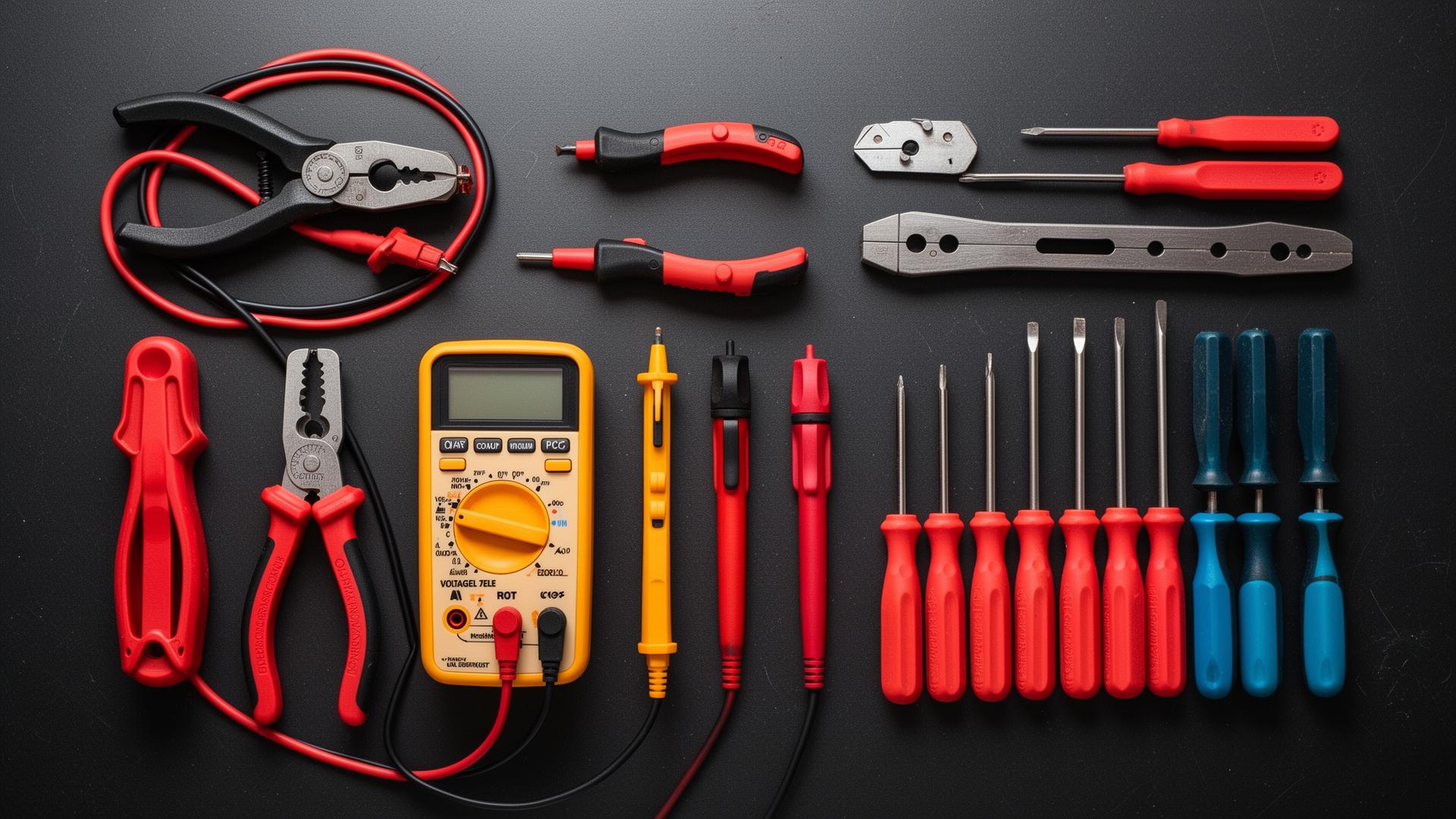
Advanced diagnostic equipment including thermal imaging, insulation testing, and circuit analysis
12+ Years
Experience
Part P Registered
Registration
Advanced
Diagnostics
Fully Insured
Coverage
First Visit
Fix Rate
When Do You Need Fault Finding?
Electrical fault finding is a diagnostic process that identifies the root cause of electrical problems — not just the symptom. It is needed when you experience circuit breakers that trip repeatedly, partial power loss, lights that flicker without explanation, sockets that stop working intermittently, or buzzing sounds from your consumer unit.
Unlike a simple repair, fault finding requires systematic testing to isolate the problem. A tripping RCD, for example, could be caused by a faulty appliance, degraded cable insulation, moisture ingress, a wiring fault in a junction box, or a defective consumer unit component. Each possibility must be tested and eliminated.
DIY troubleshooting and unqualified repair attempts often make faults worse. Repeatedly resetting a tripping circuit breaker without identifying the cause can mask a dangerous underlying fault. Replacing components without testing can waste money on parts that were never the problem.
Lambourn Electrical Services provides fault finding across Crawley, Horsham, Redhill, Reigate, and the wider Surrey and Sussex area. We use calibrated test instruments including multifunction testers, thermal imaging cameras, insulation resistance testers, and clamp meters to diagnose faults accurately and efficiently.
What Happens When Faults Are Left Undiagnosed?
An intermittent fault that trips your RCD every few days might seem manageable — you reset the board and life continues. But that RCD is tripping for a reason. It has detected fault current flowing to earth through an unintended path. That path could be through degraded cable insulation, through moisture in a junction box, or through a failing appliance. Each trip is a warning that something is deteriorating.
Ignoring a tripping circuit breaker increases the risk of fire. If the fault is in the fixed wiring — a loose connection generating heat, or insulation that has broken down — the problem worsens with every passing week. The connection gets looser, the insulation degrades further, and the risk of arcing increases.
Intermittent power loss to specific circuits can damage connected electronics. Computers, broadband routers, smart TVs, and other sensitive equipment can suffer data corruption, component failure, or premature wear from repeated unexpected power cuts.
The longer a fault goes undiagnosed, the more expensive the repair becomes. A loose connection that costs £80 to re-terminate today could cause cable damage that costs £500 to repair next month, or a fire that costs tens of thousands to recover from. Early diagnosis is always the most cost-effective approach.
Our Fault Finding Process
Initial Assessment
You describe the symptoms — what happens, when it happens, and how often. We ask targeted questions to narrow down the possibilities before we arrive.
Visual Inspection
We inspect the consumer unit, check for signs of overheating, examine accessible wiring, and look for obvious damage or deterioration.
Systematic Circuit Testing
We isolate each circuit and test insulation resistance, earth continuity, and loop impedance. This identifies which circuit has the fault and narrows the location.
Targeted Diagnosis
Using the test results, we narrow the fault to a specific section of wiring, a particular junction box, or a specific accessory. Thermal imaging reveals hot spots invisible to the naked eye.
Repair & Verification
We repair the fault — re-terminating connections, replacing damaged cable sections, or swapping faulty components. We then re-test the entire circuit to confirm the fault is fully resolved.
Why Professional Fault Finding Saves You Money
Root Cause Identification
We find the actual problem — not just the symptom. No guesswork, no replacing parts that were never faulty.
First-Visit Resolution
Advanced diagnostic equipment means we diagnose and fix most faults in a single visit. No repeat callouts, no escalating costs.
Thermal Imaging
We use thermal cameras to detect overheating connections and components that are invisible to the naked eye — catching faults before they cause damage.
Prevent Escalation
An £80 repair today prevents a £500 cable replacement next month — or a fire that costs thousands. Early diagnosis is always cheaper.
Clear Explanation
We explain what we found, why it happened, and what we did to fix it. No jargon, no mystery, no uncertainty.
Guaranteed Repair
All fault repairs are guaranteed for 12 months. If the same fault recurs within that period, we return and resolve it at no additional cost.
Fault Finding Methods & Equipment
Insulation Resistance (IR) Testing is the most effective method for identifying cable faults. By applying a test voltage (typically 500V DC) between conductors and between conductors and earth, we can measure the insulation resistance of each circuit. A reading below the minimum threshold (1 MΩ for most domestic circuits) indicates degraded insulation, moisture ingress, or cable damage.
Earth Fault Loop Impedance (Zs) testing verifies that the earth fault path has low enough impedance for the circuit's protective device (MCB or RCD) to disconnect within the required time. A high Zs reading can indicate loose earth connections, undersized earth conductors, or deteriorated earthing arrangements.
Thermal imaging cameras reveal temperature differences that indicate high-resistance connections. A loose terminal in a consumer unit, for example, generates heat under load. This heat is invisible to the naked eye but clearly visible on thermal imaging. We use thermal imaging as a screening tool to quickly identify hot spots across the entire installation.
RCD testing involves injecting a calibrated fault current and measuring the trip time. An RCD that trips too slowly (or not at all) at its rated current provides inadequate protection. We test at ½×, 1×, and 5× rated current to verify the full operating envelope.
For intermittent faults that only occur under specific conditions (load-related, temperature-related, or moisture-related), we may need to observe the fault in action. We use data logging equipment that records voltage, current, and fault events over an extended period, capturing transient events that single-point testing may miss.
Common domestic faults include: degraded T&E cable insulation in loft spaces (caused by heat exposure over decades), water damage to junction boxes in walls and ceiling voids, rodent damage to cable insulation, loose connections in back boxes caused by thermal cycling, and failing RCDs or MCBs in ageing consumer units.
For commercial properties, we also carry out phase rotation testing, harmonic analysis, and power quality assessment. These tests are relevant for three-phase installations, variable speed drives, and sensitive electronic equipment.
Frequently Asked Questions
Need an Electrician Today?
Get a fast, honest quote with no obligation. Available 24/7 for emergencies.